
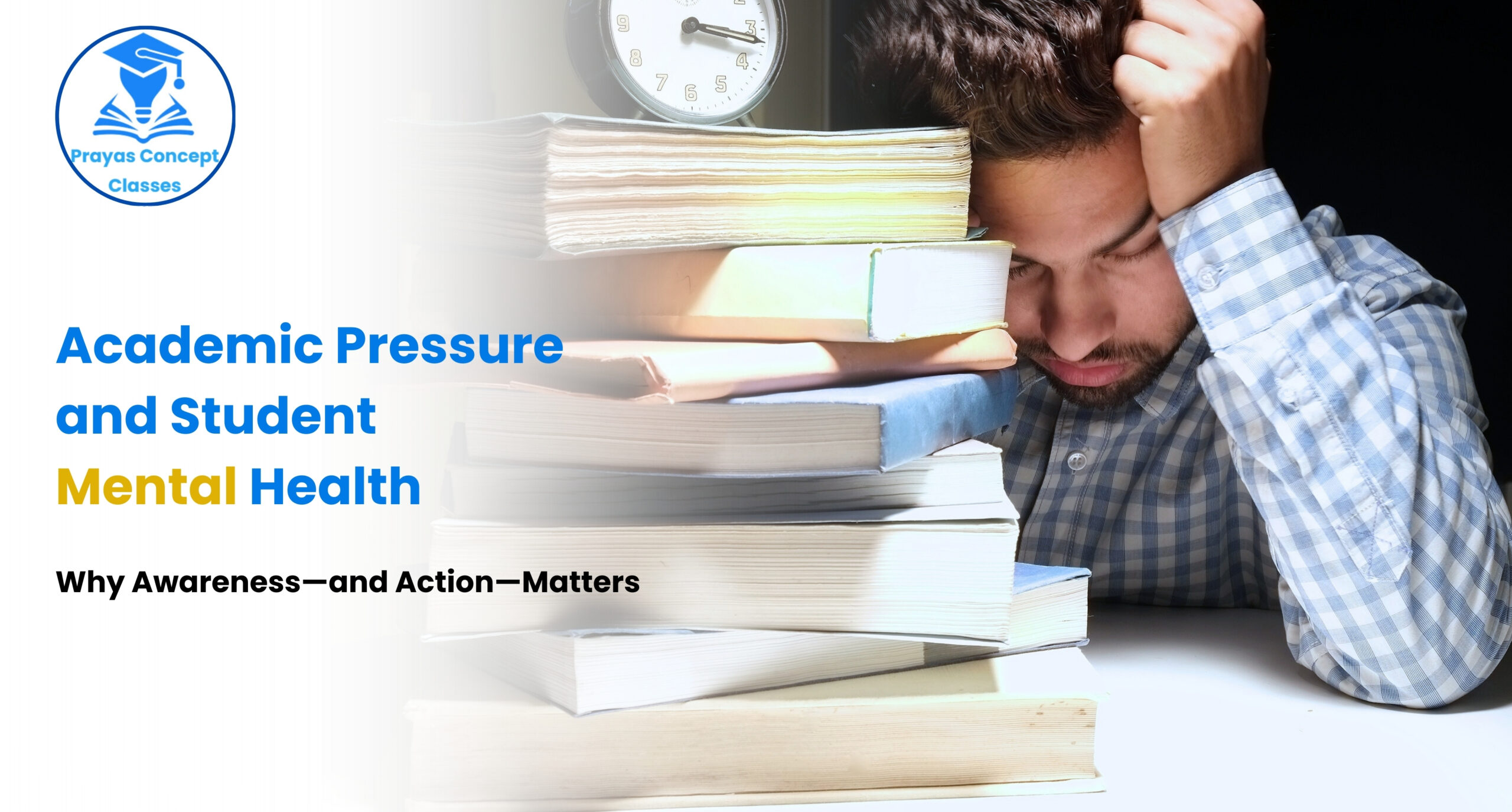
For many students, education is not just about learning—it has become a measure of self-worth. Marks, ranks, exams, and comparisons quietly shape how students see themselves. While ambition can motivate growth, unmanaged academic pressure can deeply affect mental health.
This article is written to create awareness—not fear. To replace silence with understanding. And to remind every student that their well-being matters as much as their achievements.
Understanding Academic Pressure
Academic pressure refers to the stress students experience due to expectations related to performance, grades, competition, and future success.
Pressure can come from:
- High expectations from parents or teachers
- Fear of failure or disappointing others
- Competitive academic environments
- Social comparison and peer pressure
- Uncertainty about career and future
While a certain level of pressure can encourage effort, constant or excessive pressure can become harmful.
How Academic Pressure Affects Student Mental Health
When academic stress remains unaddressed, it can impact both emotional and physical well-being.
Emotional Effects
- Anxiety before exams or assessments
- Persistent fear of failure
- Low self-esteem
- Emotional exhaustion and burnout
Mental Health Concerns
- Difficulty concentrating
- Sleep disturbances
- Mood swings or irritability
- Feelings of hopelessness
These struggles often remain hidden because students feel expected to “handle it” or “stay strong.”
Why Students Often Stay Silent
Many students hesitate to talk about academic stress because:
- They fear being labeled weak
- They worry about disappointing family
- They believe stress is “normal” and must be endured
- They compare themselves to others who appear to cope better
Silence does not mean strength. Silence often means unspoken pressure.
The Role of Awareness in Student Well-Being
Awareness is not about lowering standards—it is about creating healthy pathways to success.
mental health awareness in education, student well-being
Awareness helps:
- Students recognize early signs of stress
- Parents understand emotional struggles beyond grades
- Teachers identify when pressure becomes harmful
- Institutions create supportive academic environments
When awareness increases, support replaces judgment.
Redefining Success for Students
Success is often defined narrowly—marks, ranks, or results. But real success includes:
- Emotional resilience
- Self-confidence
- Healthy coping skills
- Lifelong learning ability
A student who learns how to manage stress is better prepared for life than one who only learns to score.
Healthy Ways Students Can Manage Academic Pressure
Managing stress does not mean avoiding responsibility. It means approaching studies sustainably.
Practical Strategies for Students
- Break study goals into manageable tasks
- Maintain realistic expectations
- Take regular breaks to prevent burnout
- Practice mindfulness or relaxation techniques
- Maintain sleep, nutrition, and physical activity
Stress management for students, coping with academic pressure
Seeking help—whether from friends, mentors, or counselors—is a sign of self-awareness, not weakness.
The Role of Parents and Educators
Students do not experience academic pressure alone. Their environment plays a critical role.
How Parents Can Help
- Focus on effort rather than only outcomes
- Encourage open communication
- Avoid constant comparison
- Offer emotional support during setbacks
How Educators Can Support
- Recognize emotional distress early
- Promote balanced learning
- Encourage growth over perfection
When adults listen without judgment, students feel safe to speak.
Mental Health Is Not Separate From Education
Mental health and academic performance are deeply connected. A stressed mind struggles to learn, remember, and grow.
Supporting mental well-being:
- Improves focus and productivity
- Builds emotional intelligence
- Reduces burnout and dropout rates
- Creates healthier future professionals
Education should develop the whole person—not just the report card.
A Message to Every Student Reading This
If you are feeling overwhelmed by studies, know this:
- You are not alone
- Your worth is not defined by grades
- Struggling does not mean failing
- Asking for help is a strength
Your mind deserves care, just like your future deserves planning.
Final Thoughts: Awareness Is the First Step
Academic pressure is real—but it does not have to control a student’s life. Awareness creates understanding. Understanding creates support. And support creates strength.
By talking openly about student mental health, we move closer to an education system that values well-being alongside achievement.
Because a healthy student is not just a better learner—but a stronger human being.